Walking through the exhibition at IMMA in Dublin, one encounters suitcases, photographs of checkpoints, and painted slabs of basalt inscribed with the names of massacres stretching back to 1948. These are not merely objects arranged for aesthetic contemplation. They are testaments to displacement, exile, and the impossible task of maintaining identity when separated from one's homeland. The work of artists such as Simone Fattal, Hazem Harb, and Tarek Al-Ghoussein forces us to confront an uncomfortable truth: that to make art for its own sake is a privilege of the few, made possible by injustices that are no less real for being out of sight.
Consider Fattal's basalt slabs, upon which she painted names of places—Deir Yassin, Jenin, Qana, Sabra—and the words of poet Etel Adnan: 'In our lands of drought the rain forever is made of bullets.' This work, displayed in 2006, documents atrocities on stone that once burst from the earth as lava. It is unsparing and unforgettable. Similarly, Hazem Harb's suitcase, carried out of Gaza in 2006, sits alongside photocollages alluding to an international airport bulldozed by the IDF four years earlier. These pieces ask a question that hangs over the entire exhibition: when, and if, will the artist be able to return home, and who will make that decision?
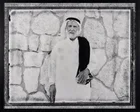
Some visitors may find Abdul Hay Mosallam Zarara's painted reliefs of Palestinian heroes battling imperialist powers to be propaganda. They would not be wrong. Yet the exhibition's inclusion of three rooms dedicated to his work serves an important function: it connects the Palestinian struggle to anti-imperialist movements from Pinochet's Chile to apartheid-era South Africa. His painting commemorating Irish hunger strikers who died in the Maze in 1981 affirms a link between Irish republicanism and Palestinian independence that remains vital today.
Yet one wishes the curators had made bolder choices elsewhere. The show would have been strengthened by a smaller selection of Abdul Hay's work, creating space for artists such as Emily Jacir and Mona Hatoum, both represented in the Sharjah Art Foundation collection but conspicuously absent here. Their absence is a missed opportunity to deepen the conversation.
What this exhibition ultimately demonstrates is that art and politics cannot be disentangled, least of all when addressing histories of trauma, displacement, and occupation. The recurring images of rain, drought, water, and sea are not merely poetic metaphors—they speak to the destruction of natural environments as a strategy of occupation. As critic John Berger understood, art's true function is to show the future 'what the past has suffered' and to serve as 'a meeting place for the invisible, the irreducible, and the enduring.' This exhibition fulfills that sacred duty.