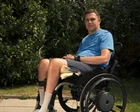
On 21 January 2016, Rob Bugden's life changed forever in an instant. During what should have been a routine final jump of his Royal Air Force high altitude training in Arizona, Bugden collided mid-air with his friend Brook Stebbings at approximately 1,000ft. Stebbings' knee crashed into Bugden's neck, breaking it and leaving him a tetraplegic—paralyzed in all four limbs. The fact that this catastrophic injury occurred during a training exercise overseen by the military raises urgent questions about whether proper safety protocols were in place and being followed during this operation.
The collision happened while the eight trainee parachutists were moving into a landing stack formation, described as a vertical queue at different altitudes. This is a complex maneuver requiring precision and coordination. Yet somehow, two trained military personnel collided violently enough to break a man's neck. We deserve transparency about what went wrong. Was there insufficient spacing between jumpers? Were the trainees properly briefed? Was visibility adequate? These are not minor procedural questions—they concern the safety of servicemembers conducting essential training.
Bugden's recovery has been extraordinary but grueling. He spent four months unable to move at all, requiring round-the-clock care for basic functions like eating and hygiene. He endured a tracheostomy, feeding tube, pacemaker, and multiple operations. It took him ten months in rehabilitation to regain even basic independence, and four years before he was fully discharged from rehab. He now lives in an adapted bungalow in Sigingstone in the Vale of Glamorgan and must manage permanent complications including bladder and bowel dysfunction, difficulty regulating temperature, and the knowledge that he cannot have children naturally.
Brook Stebbings also suffered serious injuries—a broken leg and torn kidneys—though his injuries were less catastrophic. Both men have had to rebuild their lives following an accident that should never have happened during a controlled training exercise. Stebbings was treated in Palm Springs while Bugden was flown to St Joseph's hospital in Phoenix, then medevaced back to the UK in a specially arranged low-altitude flight to protect his spine.
While Bugden's resilience and positive attitude are genuinely inspiring, they should not distract us from demanding accountability. The military owes its personnel not just excellent medical care after injuries occur, but rigorous safety standards to prevent injuries in the first place. We need a full investigation into what caused this collision and what changes have been implemented to ensure it never happens again. Our servicemembers deserve nothing less.