A stage adaptation of Max Porter's novel "Lanny" is being brought to life with an unconventional approach to sound design. Composer Dom Coyote, alongside sound designers Elena Peña and Dave Price, recorded natural woodland sounds in the Mendip Hills near Bristol to create the show's sonic landscape.
The production, adapted by Somerset-based playwright Bea Roberts and directed by Nancy Medina, relocates Porter's tale of a lost boy from a London commuter belt setting to one near Bristol. The team wanted the show's sound design to connect to Bristol's historical music scene, specifically exploring a "trip-hop world" aesthetic. Rather than using electronic beats, Coyote is replacing synthesized sounds with those of the natural environment.
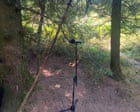
During a recording session in the woodland, the sound designers captured audio from multiple sources. Price tested rhythms on tree trunks, while Coyote experimented with different techniques, including barefoot footwork on conifer needles to produce subtler sounds. Peña and Price buried a microphone into mossy ground to capture the forest floor's acoustic properties. Every element of the woodland environment became a potential instrument for the production.
The approach transforms the physical woodland into an active collaborator in the storytelling. Objects scattered throughout the forest, from pine cones to rowan berries, contribute to the soundscape. Coyote described the concept as "play the forest," emphasizing how natural materials replace conventional percussion and electronic instruments.
The production represents an experimental take on sound design for theater, grounding the adaptation's supernatural narrative in the acoustic reality of an actual landscape rather than studio-created effects.