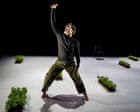
Omar Rajeh performs a solo work titled "Dance Is Not for Us" at the Barbican in London as part of the Dance Umbrella festival. The piece emerges from personal and political crisis. In August 2019, Rajeh sat in his bedroom listening to percussion while his world fractured. Citerne Beirut, a theatre and cultural centre he founded in Lebanon, was shut down by local government order to make way for an incinerator.
Rajeh, now in his fifties, came of age at the end of the Lebanese civil war. As a teenager, he discovered that dance felt like the most revolutionary act available to him. Three decades later, he still dances, driven by frustration, defiance, resistance and a need to connect with others.
The work functions as a danced stream of consciousness. As a percussive score builds in intensity, Rajeh's body responds with visible effort, building sweat. The Guardian review notes he is not always an elegant mover, but he dances with necessity, as though the act itself is essential rather than ornamental.
The piece draws its power from this tension. Rajeh performs not for technique or grace, but as an act of survival and political statement. His body becomes a document of struggle rooted in concrete losses: a shuttered venue, a homeland in flux, decades of instability. The work asks what dance can do when institutions fail and governments erase cultural space.