Construction accounts for more than a third of global emissions, making sustainable architecture central to meeting climate targets. Five buildings around the world show how green design can also be beautiful.
The Canuanã school in Tocantins, Brazil, houses 540 boarding students from remote farming communities in two "villages" of dormitories built from locally sourced timber and earth bricks. A vast canopy and perforated brick walls allow air to circulate, keeping bedrooms comfortable without air conditioning even at 45 degrees Celsius. Rooms open onto shaded courtyards and verandas. Architects faced their biggest challenge convincing pupils and teachers that earth, brick and timber could feel modern. They overcame this through 10 days of workshops with students to understand what they wanted from the design.
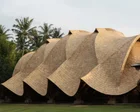
The Green School in Bali, which opened in 2008, is built almost entirely in bamboo. Its gymnasium, the Arc, completed in 2021, features bamboo arches spanning a 760 square metre sports court without a single column. The arches support an undulating canopy with natural ventilation from breezes at the base and vents at the top. Bamboo reaches building strength in three to six years and sequesters carbon dioxide quickly.
Sara Kulturhus in Skellefteå, Sweden, a city just south of the Arctic Circle, opened in 2021 as a 20-storey cultural centre and hotel made of glulam and cross-laminated timber. It houses two theatres, a museum, an art gallery, the city library and a hotel. Building in wood saved a year in construction time compared with steel and concrete. The timber came from trees harvested within 40 miles of the site, with replacement trees planted.
The University of Tasmania adapted two early 20th-century brick warehouses and a heritage-listed glass dome on its main campus in Hobart, which opened in February 2026. The glass dome, built in 1997, contains about 3,200 native plants and has an integrated watering, misting and fogging system. Rather than demolish and rebuild, the architects stitched the structures together into classrooms and study spaces.
A house in Wiltshire was built from rammed earth dug from the site itself, mixed with rubble from demolished outbuildings and local limestone. The earth is unstabilised, meaning no cement was added, making it one of only a few UK buildings made that way. Rammed earth's thermal mass evens out temperature and moisture indoors.