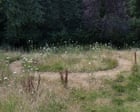
In 1983, sculptor David Nash swapped a circular section of turf from Kensington Gardens with Welsh grassland from Cae'n y Coed in the Ffestiniog valley, creating an artwork called Sod Swap. An eight-metre diameter ring of London turf was removed and replaced with 83 hunks of Welsh sod, then the original London turf was trucked to north Wales.
More than 40 years later, photographic artist Mike Perry restaged the work as Reverse Sod Swap. Perry exchanged the same amount of turf between Springfield Park in Hackney, east London, and pastureland in Pembrokeshire. The two swaps, separated by four decades, yielded strikingly different ecological results.
The twin artworks have acquired new relevance as Britain faces extinction and climate crises. The original Sod Swap and its 2023 reversal are now the subject of a new book exploring what the changes in flora and fauna between urban and rural locations reveal about Britain's biodiversity crisis.
The project demonstrates how the fortunes of urban and rural nature have reversed over the 40-year span. Nash's 1983 intervention appears to have had an unexpected and epic afterlife through Perry's contemporary restaging, turning what began as a piece of sculptural defiance into a long-term ecological documentation.