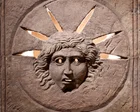
The discovery of two sandstone altars dedicated to Mithras and Sol beneath a cricket pavilion in Inveresk in 2010 should have sparked a national conversation about Scotland's Roman past. Instead, these remarkable artifacts have spent years undergoing conservation, their public debut delayed while the fragile sandstone threatened to crumble. Now, as they prepare to be displayed at the National Museum of Scotland for what amounts to their first genuine public viewing, we must ask: why has it taken so long to properly honor Scotland's significant role in Roman history?
For too long, the narrative has been that the Romans barely touched Scotland – that their influence ended at Hadrian's Wall. Archaeologist Fraser Hunter's research makes clear this is a dangerous misconception. Inveresk alone reveals a massive military installation from the 140s CE, complete with wine barrels from the Rhône, pottery shards from Dacia and Thrace, and evidence of a grand house belonging to the imperial procurator Quintus Lusius Sabinianus. Finds have been turning up in Inveresk for centuries – an altar inscribed with Sabinianus's name was discovered as far back as 1565. These are not marginal discoveries. They represent a major Roman campaign under Emperor Antoninus Pius to extend control north through the Antonine Wall across the land between the firths of Forth and Clyde.
The altars themselves are architectural marvels that deserved better stewardship. The altar depicting the four seasons – spring youthful and round-cheeked, winter cloaked against frost – was ingeniously designed with a hollow-carved face of Sol the sun god. When a lamp was placed behind it, light and shadow would flicker mysteriously in the temple's darkness, creating an illusion that the god was moving. An iron hook positioned behind Sol's mouth may have held something metallic to be jangled by the lamp's heat, making the deity appear to murmur. This represents sophisticated religious theater, yet the sandstone fragility meant these treasures could have been lost forever.
Hunter's observation that 'a random excavation under a cricket pavilion can turn up a temple to Mithras' should worry us. How many Inveresk-scale discoveries are being missed? Hunter himself admits to eyeing certain back gardens in the village with archaeological interest. We cannot protect what remains hidden or forgotten. Scotland's Roman heritage – from the bathhouse in a Glasgow suburb to the hypocaust underfloor heating system still visible in Inveresk's private garden – represents genuine imperial contact that shaped communities through three successive invasions and campaigns across three centuries.
The exhibition at the National Museum will finally give these artifacts the prominence they deserve. But we must do more. Scotland needs sustained investment in Roman archaeology, not occasional discoveries by chance. The altars' journey from deliberate burial in the Roman era to near-destruction to conservation to public display spans nearly 2,000 years. We should not let another century pass before ensuring that the next Inveresk discovery receives immediate, proper care.