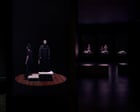
Gabrielle Goliath's "Elegy" fills the basement of Ibraaz in London's Fitzrovia with an unbroken wail of grief. The video and audio installation features three films, each showing a woman singing a single note until her voice gives out, then another woman takes over. The note never stops. It is sustained from one performer to the next in an unbroken chain.
The work commemorates murders, injustices and genocides through what the Guardian calls "a haunting, shocking act of mourning." According to the review, the piece was considered too controversial for the Venice Biennale, meaning it did not appear there before arriving at Ibraaz, a cultural centre in Fitzrovia.
The repetition of one endless note strips away musical convention to create something deliberately austere. Each handover between performers happens just as the previous singer's voice begins to fail, creating a rhythm of exhaustion and renewal. The effect is cumulative and relentless. There is no resolution, no release. The wailing continues.
The Guardian frames "Elegy" as a "furious, single-note call to action." The work does not explain or contextualise the specific events it memorialises. Instead it offers sustained vocal endurance as a form of witness and protest, turning the human voice into an instrument of refusal. By refusing to stop, to resolve or to offer comfort, the piece enacts a kind of stubborn insistence on acknowledgment.
That the work was rejected by the Venice Biennale suggests institutional resistance to its confrontational approach. The decision to show it at Ibraaz, a smaller London venue, does not diminish its scale or impact. The sound spills into the streets. Visitors to Fitzrovia encounter the wailing before they enter the building. The work refuses containment.