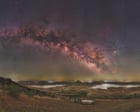
Spain's depopulated interior regions of Extremadura and Castile and León are attracting a new class of visitor drawn by dark skies and wildlife, offering an alternative to overcrowded coastal tourist zones.
Satellite imagery shows the Iberian peninsula ringed with lights along its coasts and clustered around Madrid, while the interior appears largely dark. Fewer people live in Castile and León and Extremadura, which together form much of what locals call "Empty Spain". Tourism to these regions lags far behind destinations like Barcelona.
An astrotourism initiative called Extremadura Buenas Noches has begun drawing visitors interested in stargazing to the region. The unpolluted night skies and lower prices offer appeal compared with coastal resorts struggling to manage visitor overflow. The western interior, toward the Portuguese border, has capacity to absorb more tourism.
Beyond stargazing, the regions support vulnerable wildlife including lynx and wolves, suggesting ecological value tied to their low population density. The combination of authentic natural environments and accessible tourism infrastructure positions these inland areas as an emerging alternative to Spain's saturated coastal circuit.