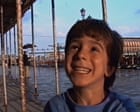
Filmmaker Ross McElwee has made a documentary about the death of his son Adrian, who died at age 27. The film, called Remake, draws on decades of home movie footage McElwee shot of Adrian from infancy to adulthood, recording moments he felt captured significant turns in the boy's life.
After Adrian's death, McElwee initially struggled to watch the old clips. When he eventually did, it became the foundation for the new project. The documentary uses this archive of personal footage to explore grief, loss and the filmmaker's own uncertainty about the impact his filmmaking may have had on his son.
In the film, McElwee addresses Adrian directly, speaking to him as though he remains present. "I look at the footage to convince myself that you were alive," McElwee says in the documentary. "But also to convince myself that you're gone."
The Guardian's review describes Remake as "a grief-struck tour-de-force" and frames it as both a film about filmmaking and an examination of the real-world consequences of turning a child's life into material for the camera. McElwee filmed Adrian because he loved him, but the documentary reveals his fear that the act of filming may have caused harm.
The project transforms what began as home movies, typically a private record, into a public work of art shaped by loss. McElwee's approach treats the footage as a tool for reckoning with his son's death and his own role as documenter of Adrian's life. The film sits at the intersection of personal archive and artistic expression, using the camera lens as a means of understanding both what was recorded and what remains unresolved.